Mention Monitoring
Part of PR response and issue handling
Preparing a factual response to a journalist's concern
How to answer a journalist's concern with checked facts, clear limits, an agreed deadline and a reliable follow-up.
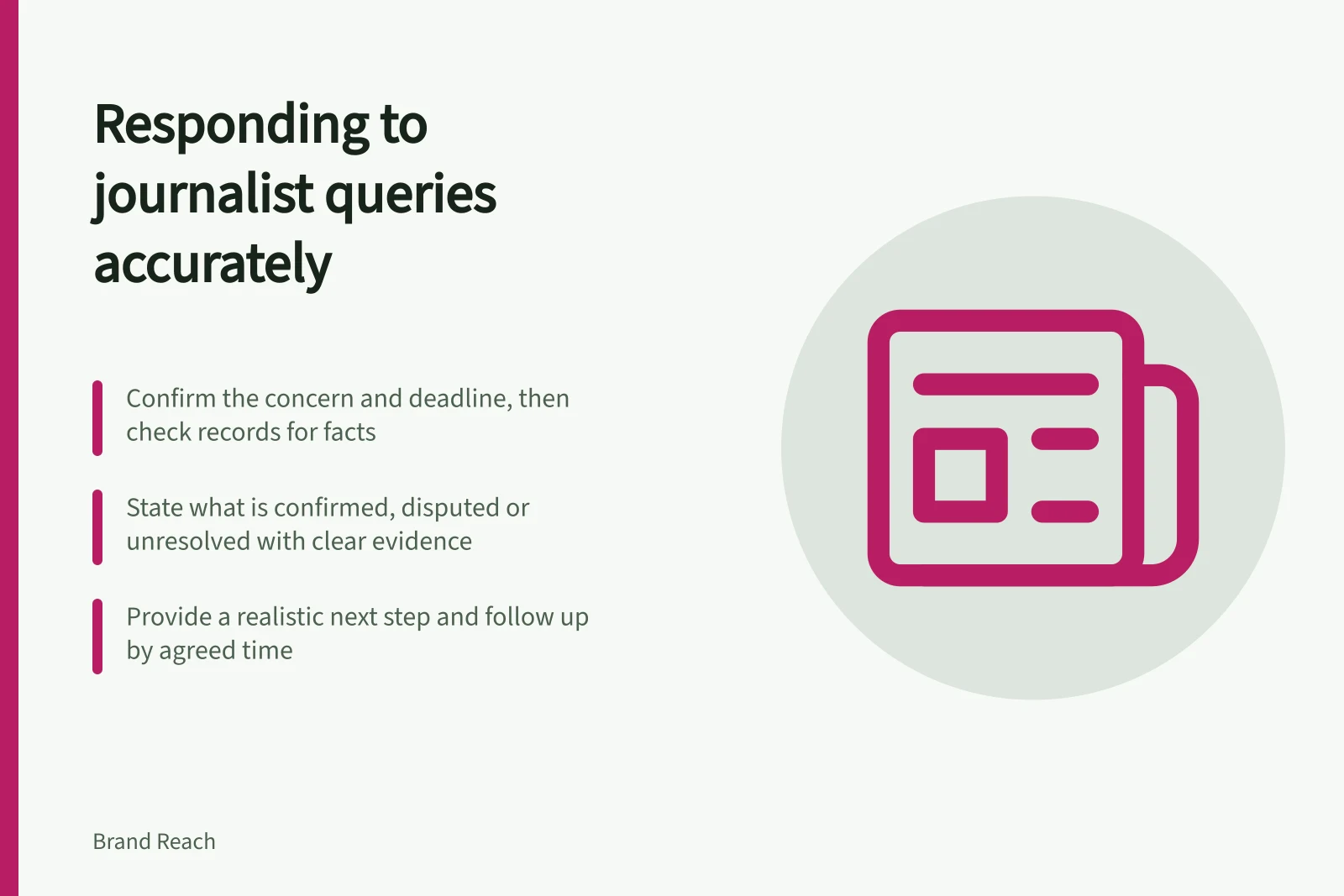
Answer the concern the journalist raised. Confirm the question and the deadline, check the relevant records, then state what the organisation can establish, what remains unresolved and when a further answer is possible. A holding response should give a genuine next step while checks continue.
Pin down the concern
Read the request as a specific question: did an event happen, why did it happen, who was affected, was an earlier company statement accurate? Ask for clarification if the alleged fact, date or publication is unclear. Record the concern and the deadline given; asking for more time does not itself extend it.
Separate the journalist’s claim from the organisation’s evidence. A question about a reported failure does not establish that it occurred, and an internal denial does not settle it either. Identify people with direct knowledge and the records that could answer the point.
Australian Media Standards and Guidelines
- ABC Editorial Policy – AccuracyRequires factual verification before publication
- ABC Fair Opportunity to RespondOrganisations must be given a fair chance to respond to allegations
- Press Council of Australia – Statement of PrinciplesEmphasises truth, fairness, and accountability in reporting
Build an answer the evidence can carry
Before writing, make a short note for each proposed claim: its source, the date and group it covers, and any limit. Check names, numbers, locations and sequence. If the concern involves a company study, ask its owner to check the underlying calculation rather than repeating the published summary.
Decide which position the evidence supports:
- Confirmed:State the fact and its scope.
- Partly confirmed:State the supported part and identify what remains open.
- Disputed:Give the specific evidence for the organisation’s position without treating disagreement as proof the journalist is wrong.
- Unresolved:Name the check under way and offer a further response time only if it can reasonably be met.
A serious allegation may need specialist review. Give reviewers the proposed answer and the supporting records so they can assess the actual wording within the available time.
Write for the question
Lead with the direct answer, then give the context needed to keep it accurate. Offer a relevant document or a knowledgeable contact where it can be shared. Identify a material limit on the evidence or disclosure rather than letting a polished statement imply that the organisation knows more than it does.
Suppose a journalist asks whether all Australian customers lost access to a service. A checked answer should identify the affected group and period; if that group is still being established, say so. A statement about how the service usually works would not answer the question.
Confirm that a named spokesperson has approved any prepared words attributed to them. Agree how an interview or supplied statement will be attributed before sending it. The publication decides whether and how to use the response; do not assume it will appear in full.
Send and follow through
Compare the opening sentence with its source once more. Check whether it would remain accurate if quoted alone. Respond by the agreed time where possible; if a promised check takes longer, tell the journalist what can already be confirmed and give a realistic next step.
Keep the wording sent, its time and the evidence version used. Assign an owner to each unanswered question. If a later check changes a material fact, send a correction promptly and identify the earlier statement it replaces.