Media Angles
Checking whether a story fits the publication's audience
Assess a media angle against a publication’s readers, editorial formats and contributor rules before deciding whether to offer it.

Section
Media Angles
Assess a media angle against a publication’s readers, editorial formats and contributor rules before deciding whether to offer it.
Media Angles
Test a proposed PR story against audience need, usefulness, timing and evidence before deciding whether to approach the media.
Media Angles
Check who can authorise a PR image, what its licence permits and whether a journalist may publish the file before adding it to a media pack.
Media Angles
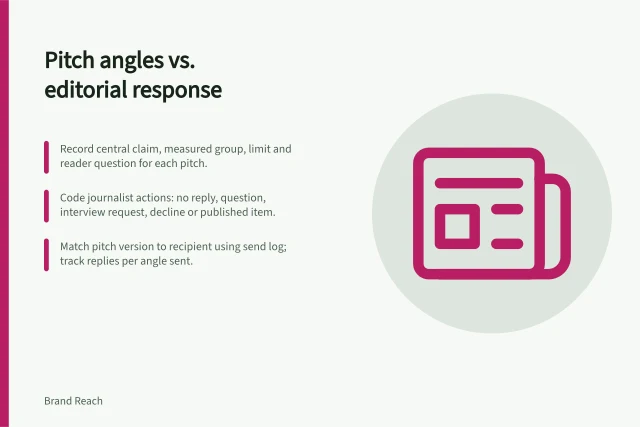
Compare pitch versions with recorded journalist questions, declines and coverage without treating silence as interest or rejection.
Media Angles
Assign spokesperson roles, maintain a current fact brief and correct conflicting statements as an issue develops.
Media Angles
Separate a checkable observation from product praise, broad comparisons and unsupported conclusions before using it as a media angle.
Media Angles
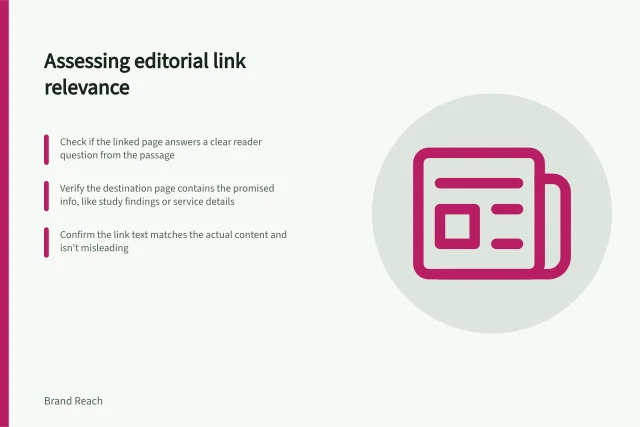
Check a digital PR link's surrounding passage, reader need, destination and publication route before calling it editorially relevant.
Media Angles
Learn how to match an expert to a journalist’s question, prepare a verifiable comment and handle attribution without confusing fact and opinion.
Media Angles
Turn a relevant story idea into a checkable media angle by testing its reader benefit, evidence, timing, limits and publication fit.
Media Angles
Compare the product before and after a release, confirm access and timing, and describe the change a product announcement can support.
Media Angles
Write photo captions and chart labels that preserve dates, sources, units, context and the limits of what an image can show.
Media Angles
Plan digital PR measurement across published coverage, audience response and useful enquiries without overstating what the evidence proves.