Media Angles
Part of Digital PR and link quality
Evaluating a link by editorial relevance
Check a digital PR link's surrounding passage, reader need, destination and publication route before calling it editorially relevant.
To judge whether a published link is editorially relevant, read the passage as its intended reader would. Does the destination help explain or verify the point made there? A live link can still be a poor fit when the context and destination do not match.
Read the passage before judging the outlet
Open the item and identify its subject, readers and the sentence containing the link. What would someone reasonably expect after clicking? A passage about a study's method may call for the research or method page. A passage about a local service change may be better served by a current explanation of that change than by a company homepage.
Judge the specific article. A broad publication can carry a relevant specialist story, while a specialist publication can make an incidental mention. Outlet size, link count and a third-party score cannot substitute for reading the page.
Key Guidelines from Google’s Search Essentials
- Link relevance depends on context
- Not based on outlet size or link count
- Research links require specific details
- Findings, method, dates, and limitations must be verifiable
- Service change links need current info
- Should direct to updated scope and conditions, not homepage
Check the destination
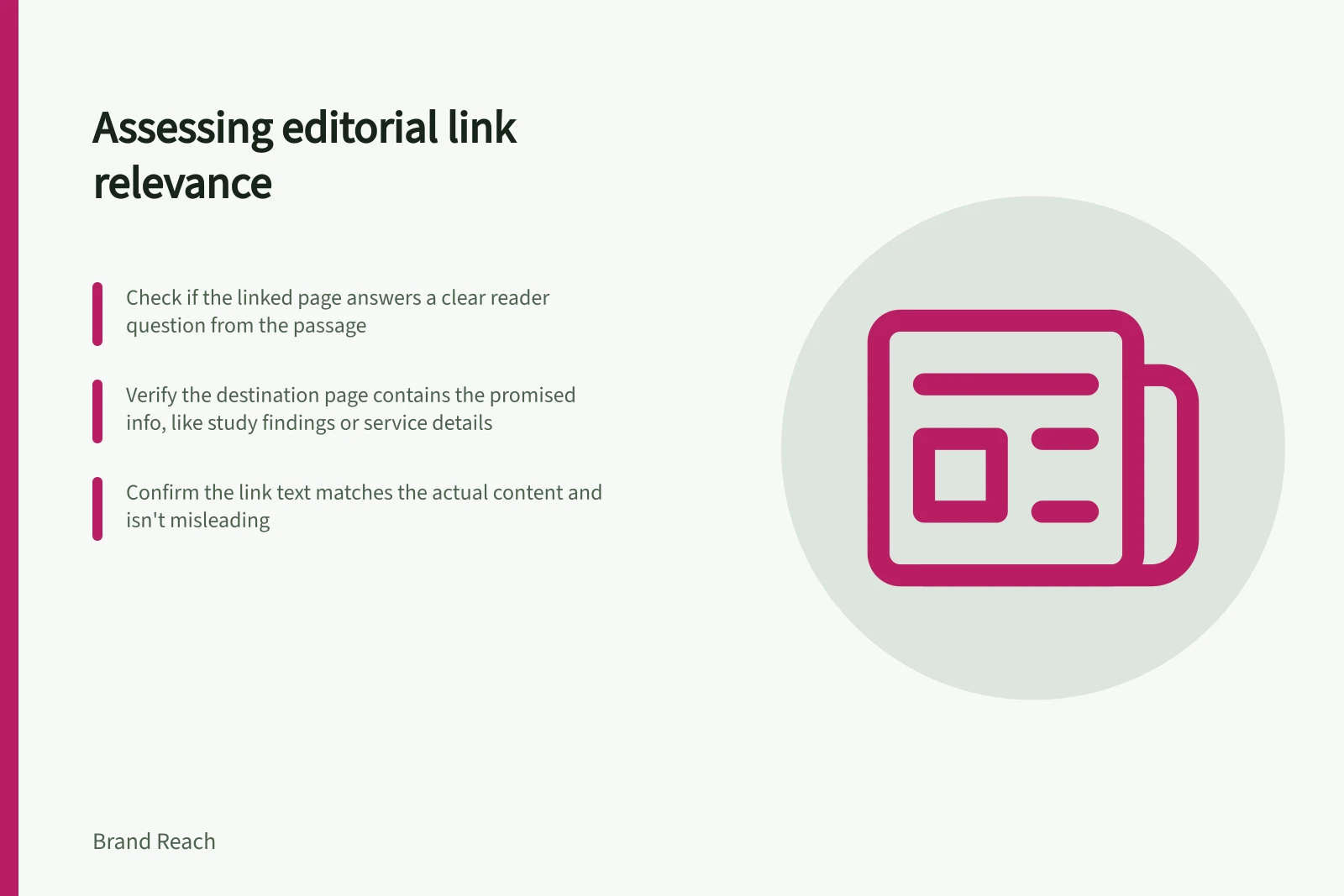
Open the linked page and confirm that the information promised by the passage is easy to find. For research, check the finding, measured group, dates, method and material limitations. For a service explanation, check its current scope and conditions.
An unrelated redirect breaks the reader's path even when the original link text sounds apt. Record the destination reached on the review date and ask the page owner to fix a mismatch. The publisher controls any change to its article.
Check the wording and publication route
Google advises that link text be descriptive, reasonably concise and relevant to its destination. Does the visible wording set an honest expectation? A source name or study title may be enough. An editorial clarification request should not demand a keyword phrase.
Establish how the item appeared before calling the link earned. The link alone does not reveal whether publication was independently chosen or commercially arranged. If the link was bought, its treatment needs a separate paid-link check. Google's spam policies address techniques that aim to deceive users or manipulate search systems; they do not classify this particular item for you.
Record the decision
Mark the link useful, needs clarification or unresolved, with a sentence explaining why. Useful means the passage and destination answer a plausible reader question. A moved destination or missing material limit may need clarification. If the publication route or current page cannot be established, leave the judgement unresolved.
Search Console provides a Links report. Inspect the current published item before assigning a label. This assessment explains editorial fit; it does not calculate ranking value or prove audience response.