Mention Monitoring
Part of Digital PR and link quality
Keeping paid sponsorship links correctly qualified
Specify and verify sponsored or nofollow treatment on paid publisher links, alongside clear reader-facing sponsorship identification.
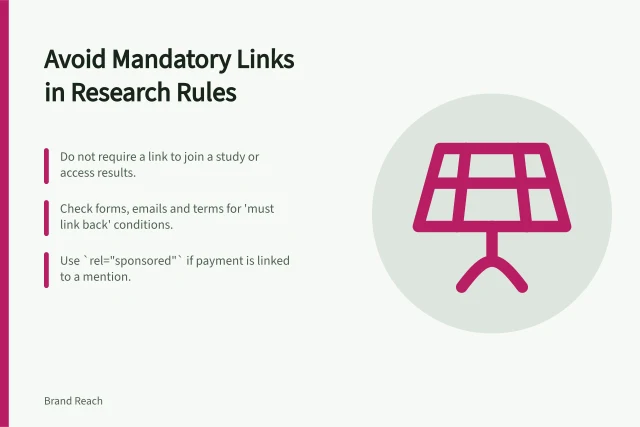
When a publisher is paid to place content containing a link, agree how each paid link will be qualified for Google Search, then inspect the published page. Google's guidance says to mark advertisements or paid placements with rel="sponsored". A booking instruction does not show what appeared on the page.
Agree the treatment before booking
Identify which links are part of the paid arrangement, including any in the article body, sponsor panel or later update. Ask the publisher which party controls them and whether its publishing system can apply the agreed rel value. If it cannot, resolve the link treatment before booking a linked placement.
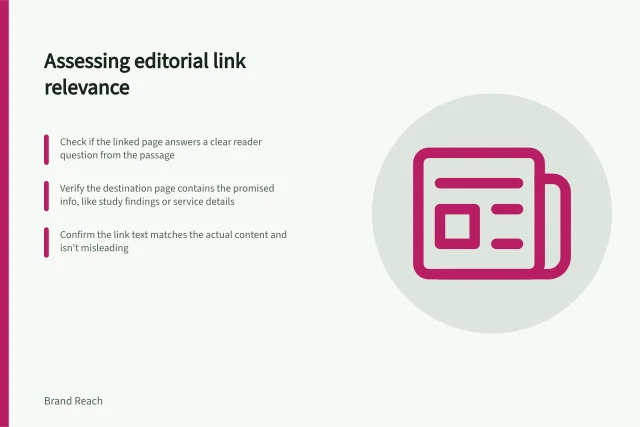
Keep each destination relevant to the sponsored content. Payment does not make a link an independent editorial endorsement. Avoid promises of ranking credit or prescribed keyword-heavy text.
Agreeing link treatment before booking
- Identify every link covered by the paid arrangement, including article body, sponsor panel and later updates
- Confirm which party controls each link and whether the publisher's system can apply the agreed rel value
- Resolve the link treatment before booking a linked placement if the system cannot apply it
- Keep each destination relevant to the sponsored content rather than promising ranking credit
Check identification and qualification separately
Readers should be able to recognise the commercial arrangement. Within its stated newspaper and magazine scope, the Australian Press Council's advertorial guidance calls for identification that prevents paid material being mistaken for independent editorial content. Check the visible label on the item and any preview that presents it to readers.
A ‘sponsored feature’ label does not itself qualify an outbound link for Google Search. Conversely, rel="sponsored" is a link attribute, not a visible explanation to readers. Check both on the published version.
Visible identification versus link qualification
- Reader-facing identificationA 'sponsored feature' label or similar wording should prevent paid material being mistaken for independent editorial content, but it does not qualify the outbound link for Google Search.
- Link qualification for Google Searchrel="sponsored" marks a paid link for Google Search, but it is a link attribute rather than a visible explanation to readers.
Inspect the published links
Open the item after release. For each link covered by the sponsorship, confirm that it appears, reaches the intended relevant page and has rel="sponsored" or nofollow on its anchor. Check links added during an update as well. If the result differs from the agreement, identify the exact page and link when asking the publisher to correct it.
Google says links carrying these attributes will generally not be followed, though the destination may still be discovered in other ways. Qualification does not promise a particular crawling or ranking outcome.
Keep the agreement, page address, date checked and resolution of any mismatch. If a later article independently reports on the sponsor, assess that article's publication route separately; the paid placement's terms do not automatically determine it.
Verifying each sponsored link after publication
- Open the published item and confirm each sponsored link appears as agreed
- Confirm each link reaches the intended relevant page
- Confirm the anchor carries rel="sponsored" or nofollow
- Check links added during a later update, not just the original release
- If a mismatch appears, identify the exact page and link when asking the publisher to correct it
- Keep the agreement, page address, date checked and resolution on file