Pitching
Part of Digital PR and link quality
Avoiding mandatory links in research participation rules
Write research participation rules that preserve accurate attribution without demanding backlinks or prescribed anchor text.
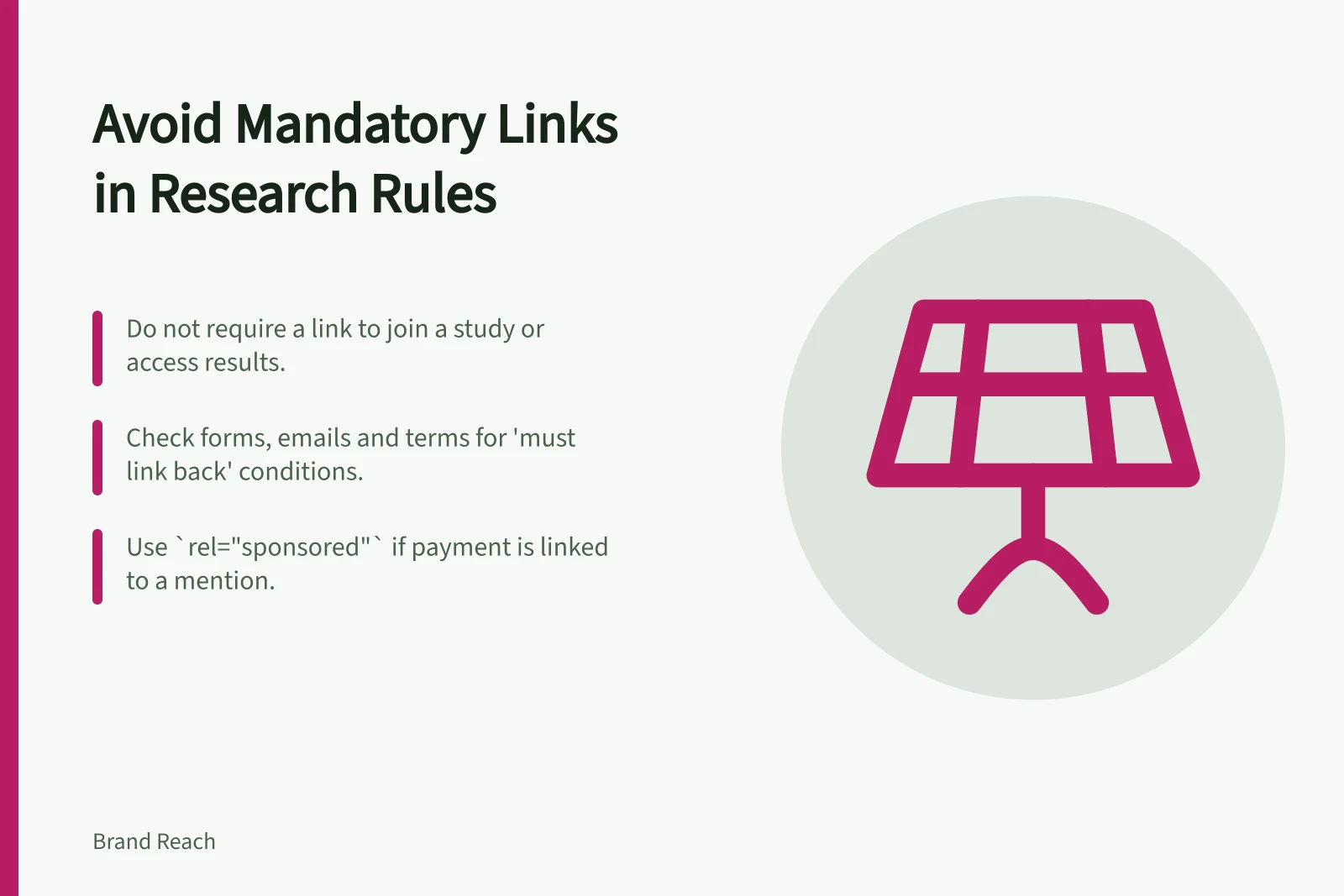
Do not make a link to your site the price of joining a study, receiving a research summary or discussing a finding. Participants and publishers should be free to decide whether a reference helps their readers and how any link should be qualified. A participation rule that removes that choice can create a Google Search link-spam problem.
Find the link condition
Check sign-up forms, contributor packs, partner emails and approval checklists as well as formal terms. Look for instructions such as ‘must link back’, a required keyword phrase, or access to a report conditional on adding a link. Identify who controls the external page and what choice the instruction leaves them.
Google describes spam generally as techniques intended to deceive users or manipulate Search systems to make content more prominent. That general definition does not decide whether a particular contract is enforceable or forbid voluntary citations.
Pros and Cons of Mandatory Link Requirements in Research Participation
- ProsEnsures visibility of study sponsor and increases reach through consistent attribution.
- ConsMay trigger Google Search spam policies if links are forced, undermining trust and SEO integrity.
Ask for accurate attribution without demanding a link
Give participants the study name, sponsor, dates, measured group and public method page so they can describe the work accurately if they choose to discuss it. Do not prescribe a ranking-passing link or commercial anchor text as a condition of participation.
A participation note might say:
You may refer to the public study if useful to your audience. Please preserve the stated population and limitations. Whether to link, and how to present or qualify a link, is your decision.
If a separate agreement provides payment, goods or services in exchange for content that includes a link, treat the arrangement as commercial. Google recommends rel="sponsored" for advertising or paid-placement links. Allowing a qualification choice does not make a commercially arranged mention independent editorial coverage.
Key Guidelines from Google on Link Practices
- Google's Spam DefinitionTechniques intended to deceive users or manipulate Search systems to make content more prominent.
- Recommended Link Attribute for Paid Linksrel="sponsored"
- Voluntary AttributionParticipants may choose whether to link and how to qualify it.
Check before launch
Follow the participant journey. Can someone contribute without linking? Can a publisher discuss the finding without using the brand's chosen wording? Does a reward or access depend on a link appearing?
If so, revise the instruction so the participant can contribute without linking.
Keep the final rule and its approval record. If an older instruction required links, stop using it and identify the arrangements it affected before describing those links as voluntary.