Mention Monitoring
Part of Measuring digital PR
Relevant coverage versus raw mention counts
Count digital PR items consistently and assess whether each conveyed a useful point to the intended audience.
A mention count measures how often a name appeared under a chosen counting rule. To judge coverage relevance, inspect what each item told the intended audience and the context in which it appeared. Report the count alongside its composition.
Define the counting unit
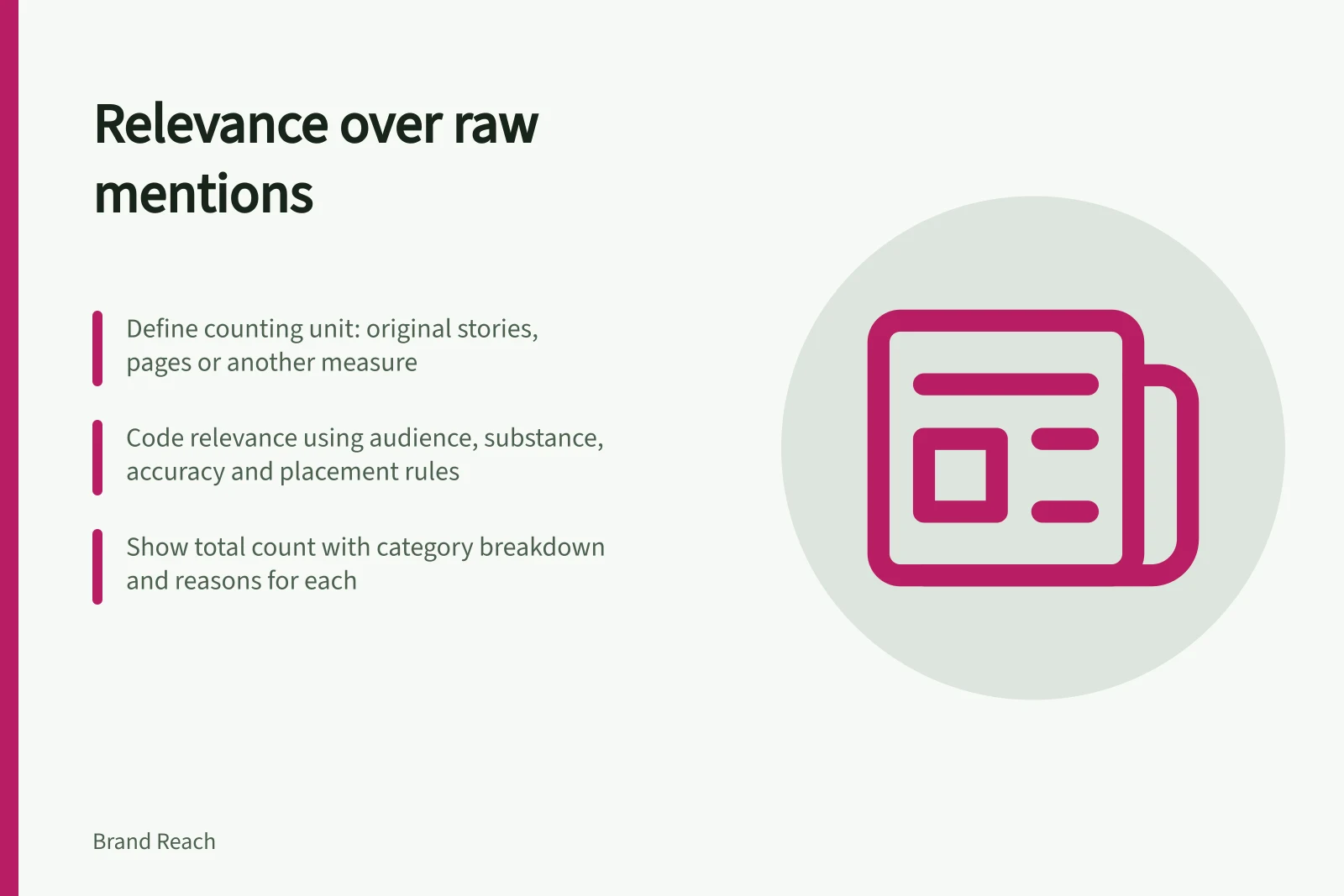
Decide whether the total represents original stories, publisher pages or another unit. Record each item’s address, date, outlet and format. Mark an original article, a brief name check, a syndicated copy and a paid placement separately, then apply the same rule throughout the review period.
Open each item before assessing it. A monitoring result shows where to look; it does not establish what the page says or whether it is an original editorial story.
Code relevance against the brief
Use a short set of questions; record the reason for each judgement:
| Check | Question |
|---|---|
| Intended audience | Does the outlet serve the defined geographic, customer or professional group? |
| Substance | Is the relevant finding or change explained, or is the business only named? |
| Accuracy | Are the main fact and its material limit represented fairly? |
| Business role | Is the business the subject, a source or an incidental reference? |
| Placement route | Was publication independently selected or part of a commercial arrangement? |
These are practical coding fields, not a universal score. If reviewers disagree about a material qualification, return to the published wording and the underlying claim.
A short local notice can be highly relevant to people affected by a service change; a longer national feature can be less useful to that objective. Outlet size alone does not decide relevance.
Explain what made up the total
Show the overall count alongside the categories above. State how many met the relevance rule and give a concise reason. If the rule changes, disclose the change and recode earlier items where possible before comparing periods.
A count records publication activity, while inspection of the content helps explain its usefulness. Neither proves that readers understood or trusted the message. Assessing visits or enquiries requires separate evidence.