Mention Monitoring
Part of Brand mention monitoring
Recording the context of a brand mention
Keep a checkable mention record with the published passage, its context, source comparison and any action taken.
A mention record should show what readers encountered, not merely that a name appeared. Capture the published item, the relevant passage, its surrounding point and the brand’s role. A later reviewer should be able to reopen the page and understand the assessment.
Record the published setting
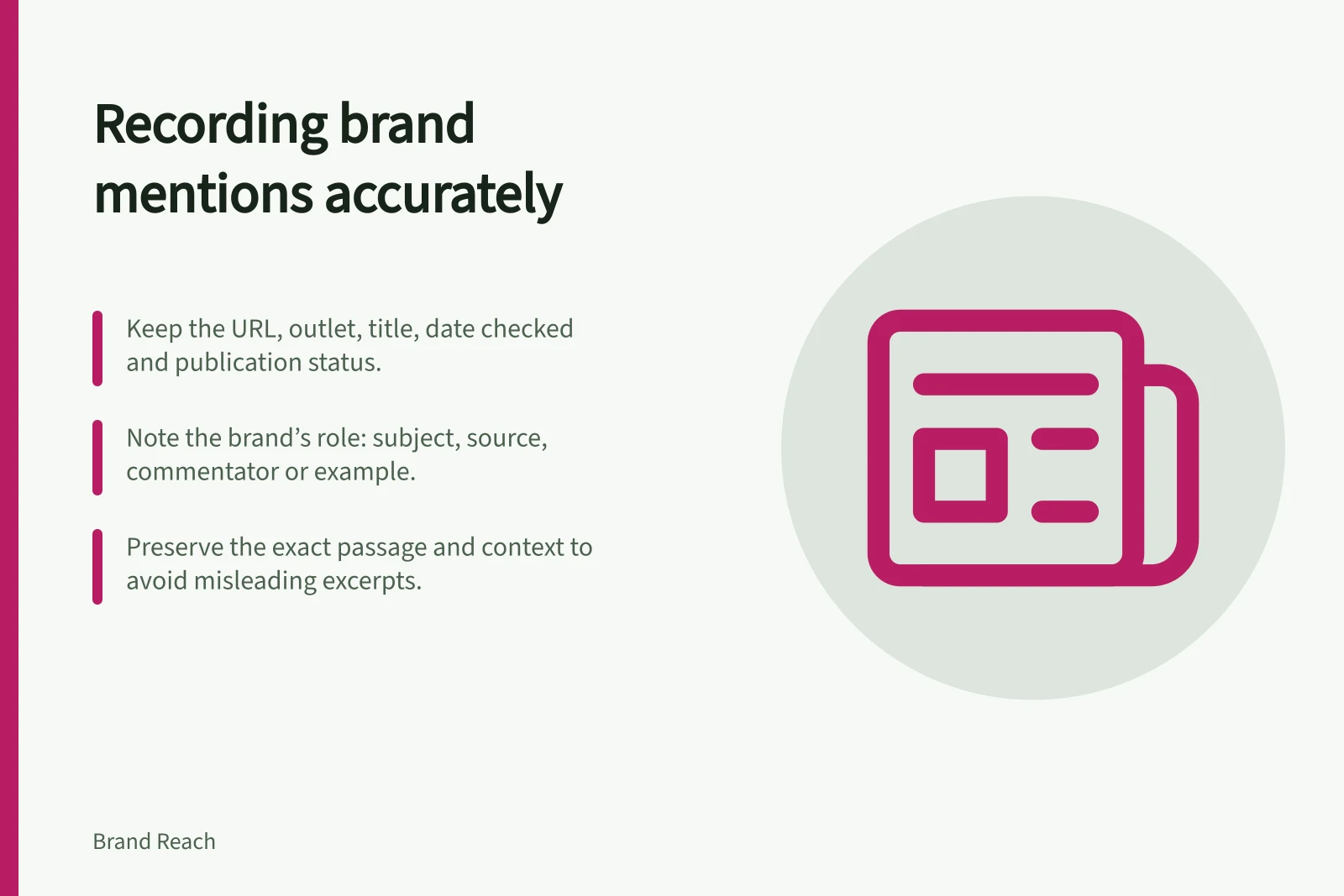
Keep the page address, outlet, article title, byline if shown, format, visible publication or update date, and date checked. Mark whether the item appears original, is an apparent copy or remains unresolved. A live page can change, so keep the observation date with what was observed.
Describe the mention in one or two sentences, covering what the article was about and what it said about the organisation. Was the organisation the subject, a source, a quoted commentator or an incidental example? Retain the short passage needed to support that description and enough surrounding text to avoid a misleading excerpt.
Preserve the claim’s limit
Where an article uses a company finding, record the group, period and qualification it conveys. Note a material condition that appears to have been dropped or changed, and identify the source version used for comparison. For criticism, separate a checkable factual assertion from the writer’s opinion. An unfavourable opinion does not become an inaccuracy merely because the brand dislikes it.
The ABC’s accuracy guidance explains that omission or loss of context can materially mislead. This is guidance for the ABC, not a finding that any particular mention is inaccurate. The record makes a later assessment possible.
Key Principles from Reputational Accuracy Guidance
- Omission can mislead
- The ABC’s accuracy guidance warns that removing context may materially mislead readers
- Not all criticism is inaccurate
- An unfavourable opinion does not become false just because the brand disagrees
- Context preservation is essential
- Maintaining the full context allows for accurate later assessment of the claim
Keep observations and actions separate
The observation states what was visible on the checked date. The action trail records who reviewed it, the evidence used, any correction or clarification request and the publication’s reply. If the page changes, add a later observation rather than replacing the first.
A compact record should answer: Where was it? What did readers see? What was the brand’s role? What source bears on the point? What remains uncertain? Who owns the next step? Limit access to working notes containing private correspondence or unpublished material.
This item-level record supports monitoring and handover. Assess campaign relevance and audience effects separately against the communication brief.