Pitching
Part of PR outreach operations
Recording who received each pitch
Keep a precise PR pitch record of addresses used, pitch versions, send times, replies and failed sends.
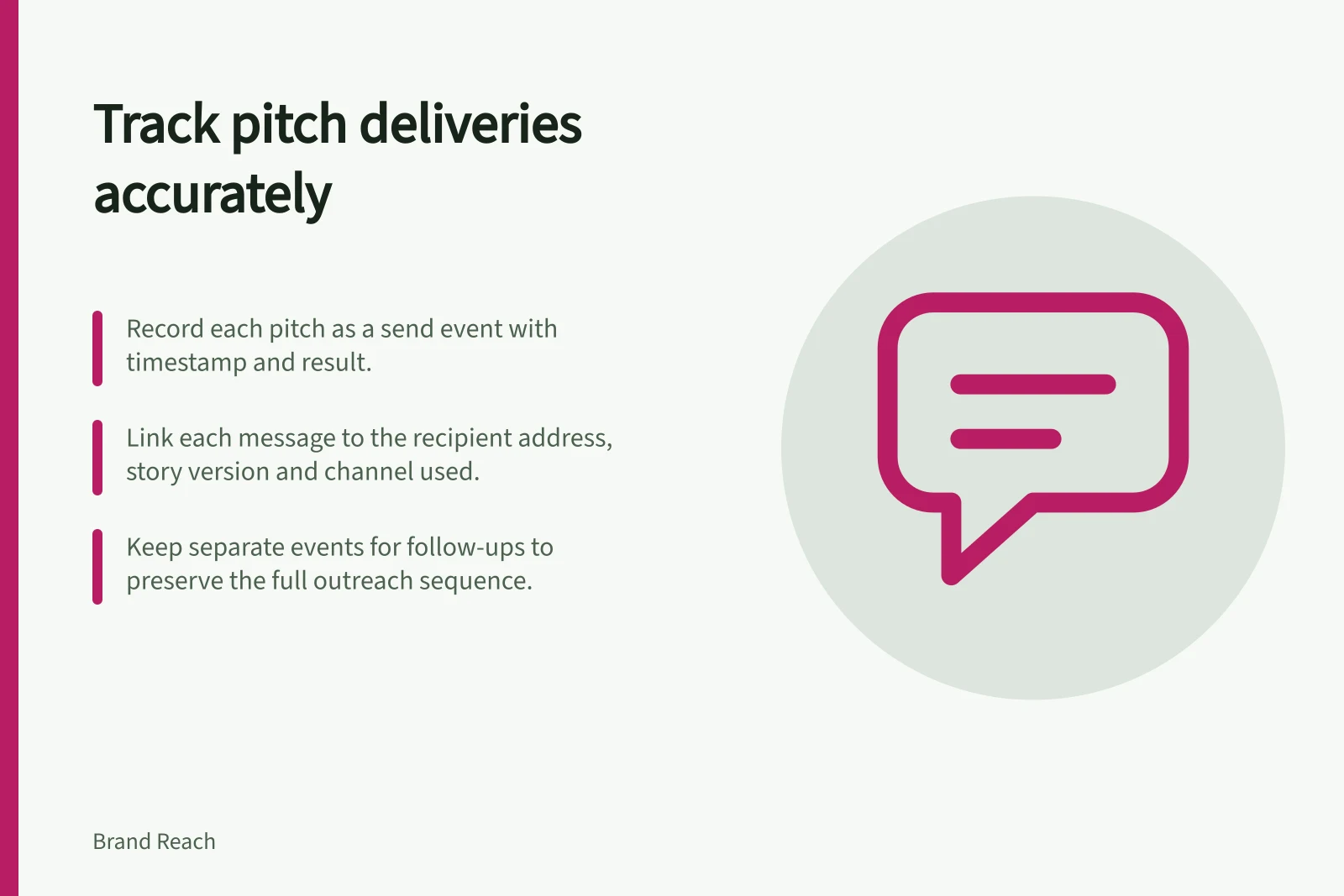
Log each pitch as a send event tied to the addresses used, the story version and the send time. The record shows what the team attempted and what the sending system reported; it cannot establish that a journalist received or read the email. It should let a colleague answer what happened without searching multiple private inboxes.
Create a record for each send
A single row per journalist loses the history when another angle or follow-up is sent. Keep a contact record for the person and a separate event for each message. Use stable campaign and pitch-version identifiers so revised wording cannot be mistaken for an earlier pitch.
For each send, capture:
- The sender and conversation owner.
- The recipient address as sent, including copied recipients, and the intended journalist or desk.
- The story or asset identifier, pitch version, subject line and channel.
- The timestamp and time zone, plus a link to the retained message in the team’s own system.
- The result the sending system can establish, such as scheduled, sent or failed.
Do not mark a scheduled email as sent. If a mail system reports a bounce, add that result rather than leaving the contact shown as reached.
A sent status does not prove delivery or readership. If a journalist says they never received a pitch, use the record to investigate without treating the send log as proof that they did.
Keep recipients and conversations distinct
A journalist may use two addresses, an editor may be copied, or a newsroom inbox may forward the pitch internally. Record the address used and intended contact separately.
Do not add an assumed recipient for a forward you cannot see. If a journalist replies from another address, check the connection before linking it to the existing conversation; preserve the original send address.
Create a separate event for each follow-up under the same story and contact. Note what changed or what new information justified it. A colleague can then see the sequence without mistaking the latest message for the first.
Make the record usable and restrained
Choose fields that support a decision: whether to respond, follow up or prevent another send. Notes should describe relevant communication, not guesses about a journalist’s motives or private life.
A named work address and employment details can be personal information. If the Australian Privacy Principles apply to the organisation, duties concerning accuracy, security and disposal or de-identification may apply.
At campaign close, compare the sent folder or sending report with the shared record. Resolve missing events and failed sends, and ensure replies and stop requests appear in the relevant contact or conversation records. The result is a record of outreach actions, not a measure of editorial interest.
PR pitch record accuracy at campaign close
- Compare sent folder with shared record
- Resolve missing events and failed sends
- Ensure replies and stop requests are logged