Original Research
Asking for a source link when original research is cited
Ask for a link to a cited study with a precise, reader-focused note while respecting the publication's editorial decision.

Archive
Original Research
Ask for a link to a cited study with a precise, reader-focused note while respecting the publication's editorial decision.
Pitching
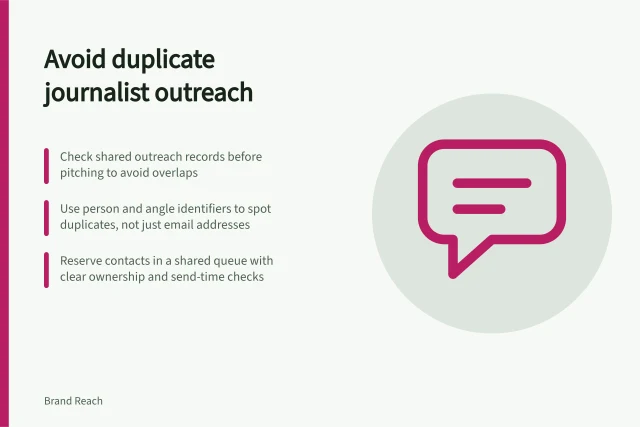
Prevent duplicate pitches with checks for known addresses, story angles, reservations and live conversations.
Pitching
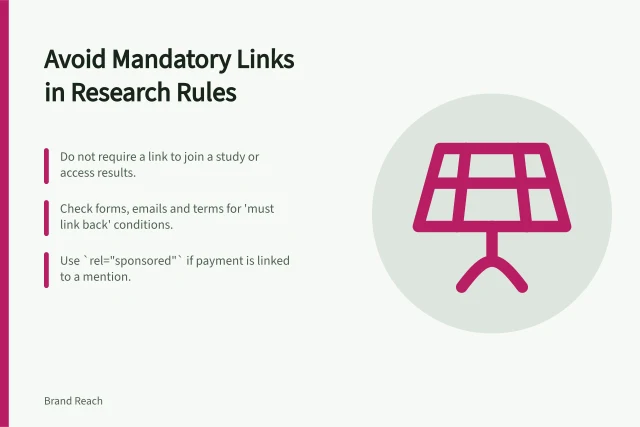
Write research participation rules that preserve accurate attribution without demanding backlinks or prescribed anchor text.
Pitching
Identify unsupported claims about cause, scale and future outcomes, then state what is known and what remains open.
Mention Monitoring
Set up a practical brand mention monitoring process, verify published items and decide when a factual response is needed.
Mention Monitoring
Check a prepared expert quote for wording, factual accuracy, context and correct attribution while respecting the journalist’s editorial control.
Pitching
Compare your proposed point with recent reporting to see what it adds, what evidence supports it and whether to send.
Mention Monitoring
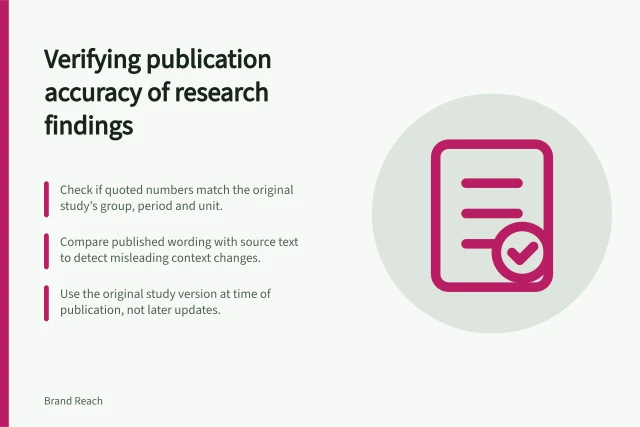
Compare a published finding with its source, including the group, period, denominator, attribution and context.
Media Angles
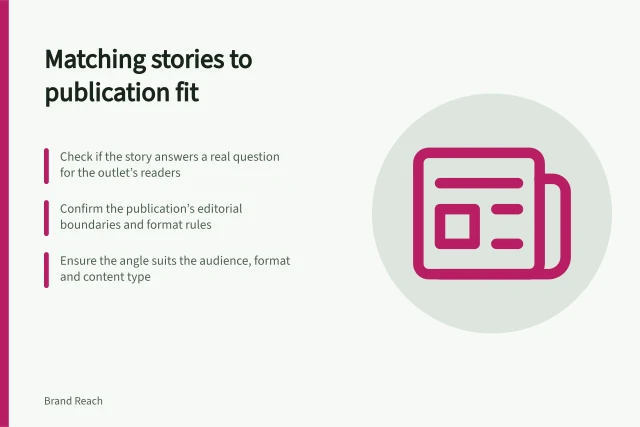
Assess a media angle against a publication’s readers, editorial formats and contributor rules before deciding whether to offer it.
Original Research
Audit a research headline against the analysed sample, measure, denominator and selection method before making a public claim.
Media Angles
Test a proposed PR story against audience need, usefulness, timing and evidence before deciding whether to approach the media.
Media Angles
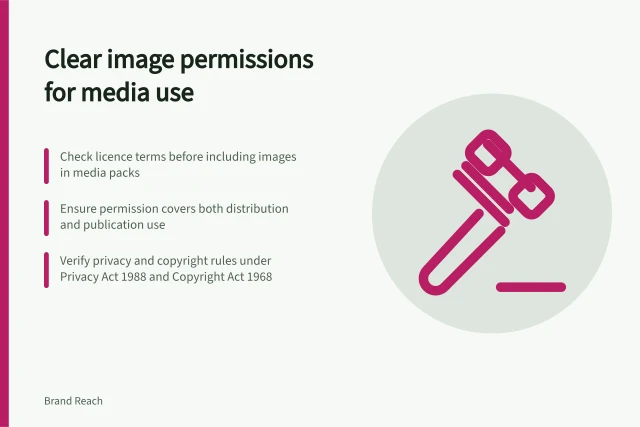
Check who can authorise a PR image, what its licence permits and whether a journalist may publish the file before adding it to a media pack.
Media Angles
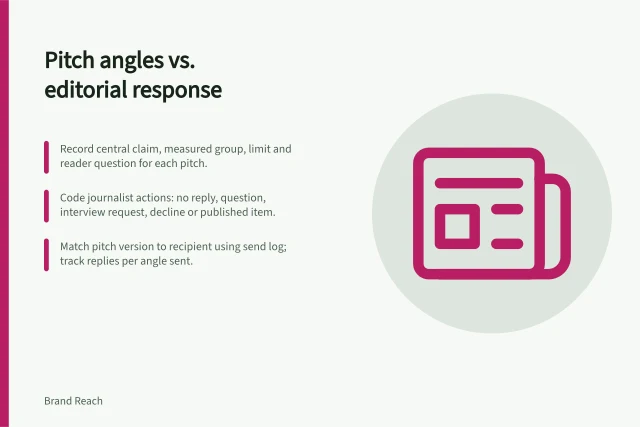
Compare pitch versions with recorded journalist questions, declines and coverage without treating silence as interest or rejection.
Media Angles
Assign spokesperson roles, maintain a current fact brief and correct conflicting statements as an issue develops.
Original Research
Trace a study error through its results, headline and distributed materials, then publish and notify a clear correction.
Original Research
A journalist should be able to read a table and reproduce the claim in the pitch. Provide the values, definitions and source context in a format that survives …
Original Research
A data-led PR asset gives a journalist enough information to check a finding, describe it accurately and judge its limits. A striking chart without the underlying …
Campaign Reviews
Set a PR objective for a defined audience, then distinguish coverage outputs from audience responses, outcomes and broader impact.
Original Research
Turn a broad research topic into an answerable question with a defined population, measure, output and claim boundary.
Campaign Reviews
Assess digital PR links by publication route, reader relevance, destination and paid-link treatment, without treating link counts as proof of value.
Original Research
Plan earned digital PR around reader needs, checkable evidence, relevant outreach and a careful assessment of the coverage that appears.
Campaign Reviews
Review a digital PR campaign against its brief, outreach, editorial response, published coverage and observable audience response.
Original Research
Plan product and company announcements around a real change, checked claims, useful evidence and clear responses to journalists.
Pitching
Compare earned digital PR and sponsored placement by editorial control, booking terms, reader identification and reporting.
Media Angles
Separate a checkable observation from product praise, broad comparisons and unsupported conclusions before using it as a media angle.
Mention Monitoring
Inspect the live page, compare apparent copies and classify whether a brand mention adds editorial substance.
Media Angles
Check a digital PR link's surrounding passage, reader need, destination and publication route before calling it editorially relevant.
Media Angles
Learn how to match an expert to a journalist’s question, prepare a verifiable comment and handle attribution without confusing fact and opinion.
Pitching
Show the source, measure, group, period and limits behind a proposed PR story so a journalist can decide what to verify.
Media Angles
Turn a relevant story idea into a checkable media angle by testing its reader benefit, evidence, timing, limits and publication fit.
Journalist Research
Use relevant bylines and current roles to find journalists whose reporting matches the specific subject of your story.
Media Angles
Compare the product before and after a release, confirm access and timing, and describe the change a product announcement can support.
Journalist Research
Check outlet fit, a journalist’s current remit, recent coverage and the contact route before deciding whether to pitch.
Mention Monitoring
Maintain journalist roles, outlets, contact routes and verification dates so stale records are checked before outreach.
Mention Monitoring
Assign owners and versions to press downloads, review them when facts change and correct earlier files that may still be circulating.
Mention Monitoring
Specify and verify sponsored or nofollow treatment on paid publisher links, alongside clear reader-facing sponsorship identification.
Media Angles
Write photo captions and chart labels that preserve dates, sources, units, context and the limits of what an image can show.
Pitching
Write a PR pitch opening that states the checkable finding, its limits and its relevance to readers before company background.
Original Research
Source data helps journalists verify a finding, but a raw file may contain personal, commercial or third-party information that should not be released. Decide what …
Journalist Research
Choose a spokesperson by the exact question, their direct knowledge, evidence access, interests and availability.
Media Angles
Plan digital PR measurement across published coverage, audience response and useful enquiries without overstating what the evidence proves.
Original Research
Review a PR research asset’s use, reader relevance and evidence currency to decide whether to maintain, update, archive or correct it.
Original Research
Plan original research for digital PR, choose a suitable method, check what the sample supports and publish findings with their limits.
Original Research
Turn documented questions from a PR campaign into a follow-up research decision with a defined population, method and claim boundary.
Pitching
Build a concise PR pack with relevant images, checkable facts, clear usage terms and a process for keeping files current.
Pitching
Set up a shared PR outreach workflow for pitch approval, send records, duplicate checks, replies and requests to stop contact.
Campaign Reviews
A practical process for checking facts, assigning response owners, communicating uncertainty and correcting the public record during an issue.
Original Research
A chart should make one supported pattern easier to see. It must also tell a journalist what was measured, when, where and from which data version. Without those …
Pitching
Draft a short expert comment that answers the question, identifies its evidence and retains the qualification needed for accuracy.
Pitching
Create a media fact sheet that separates confirmed facts, limits and company views while giving journalists a route to check key claims.
Mention Monitoring
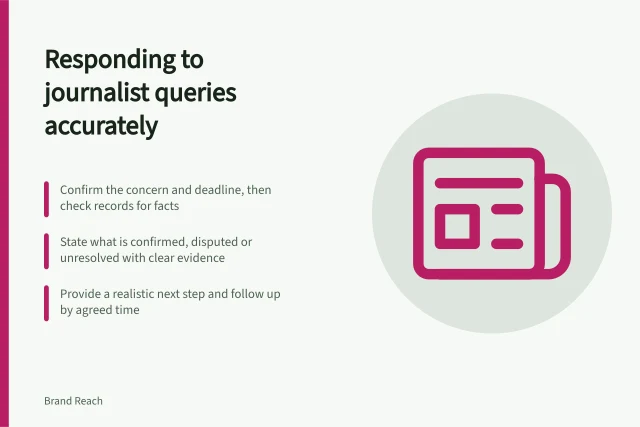
How to answer a journalist's concern with checked facts, clear limits, an agreed deadline and a reliable follow-up.
Journalist Research
Prepare journalist answers from announcement claims, with direct records, accountable owners, clear limits and a rule for unknowns.
Pitching
Match announcement claims to records journalists can inspect, and explain each record’s source, date and limits.
Original Research
Place the limits that change a research finding beside the claim, then give readers accessible method details and consistent short versions.
Original Research
Document who could enter a study, how cases were selected, why records were excluded and which denominator supports each result.
Mention Monitoring
Keep a checkable mention record with the published passage, its context, source comparison and any action taken.
Pitching
Keep a precise PR pitch record of addresses used, pitch versions, send times, replies and failed sends.
Mention Monitoring
Count digital PR items consistently and assess whether each conveyed a useful point to the intended audience.
Pitching
Test market-leader language against a defined comparison and replace unsupported rankings with verifiable announcement facts.
Mention Monitoring
Identify the exact error, provide evidence and request a correction without seeking control over editorial judgement.
Pitching
Act on a journalist's request to stop pitches by pausing sends, recording its scope and updating relevant outreach lists.
Pitching
Use stated reasons for a declined PR story to check evidence, audience fit and timing while keeping guesses separate from replies.
Pitching
Classify earned editorial coverage and paid distribution, then record their links without overstating endorsement or search value.
Original Research
Learn to distinguish observations, evidence, interpretation and forecasts in expert commentary, and state the limits of each claim.
Campaign Reviews
Review PR referral traffic and qualify enquiries while accounting for GA4 setup and attribution limits.
Pitching
Classify journalist replies, keep unanswered pitches accurate and assess each follow-up as a new decision.
Original Research
Find a defensible observation in business records by defining the population, measure, comparison and limits before writing a headline.
Pitching
Write a concise digital PR pitch with a clear story point, relevant reader angle, checkable evidence and a practical next step.
Pitching
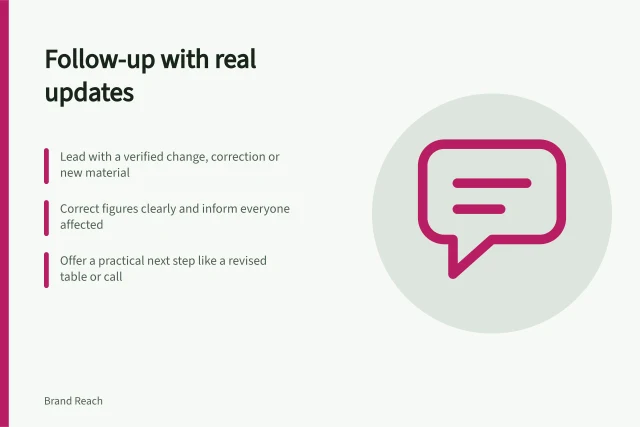
Decide when a PR pitch follow-up is justified and write a short update that adds verified information, a correction or requested material.
Original Research
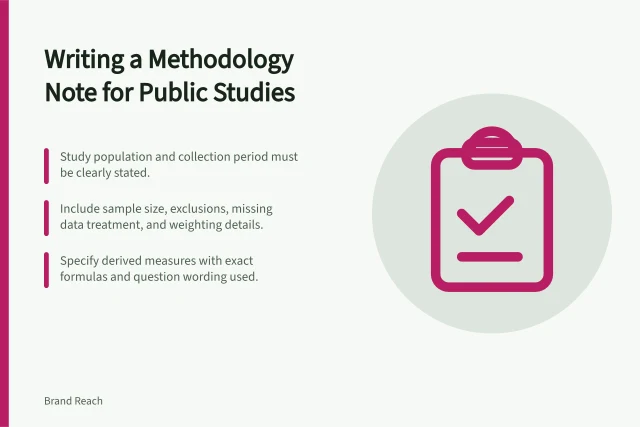
A methodology note tells a reader how a finding was produced and where its inference stops. It should be short enough to scan but complete enough that another …














![Add source line to charts: Place source line directly below chart after export.; Use ABS format: Publisher (Period) Title [URL], accessed DD Month YYYY.; Cross-check all labels and values against the original data table. Preparing a chart with a visible source and date](/covers/preparing-a-chart-with-a-visible-source-and-date-640.webp?v=b9d93b7a)